 Oct 29, 2024
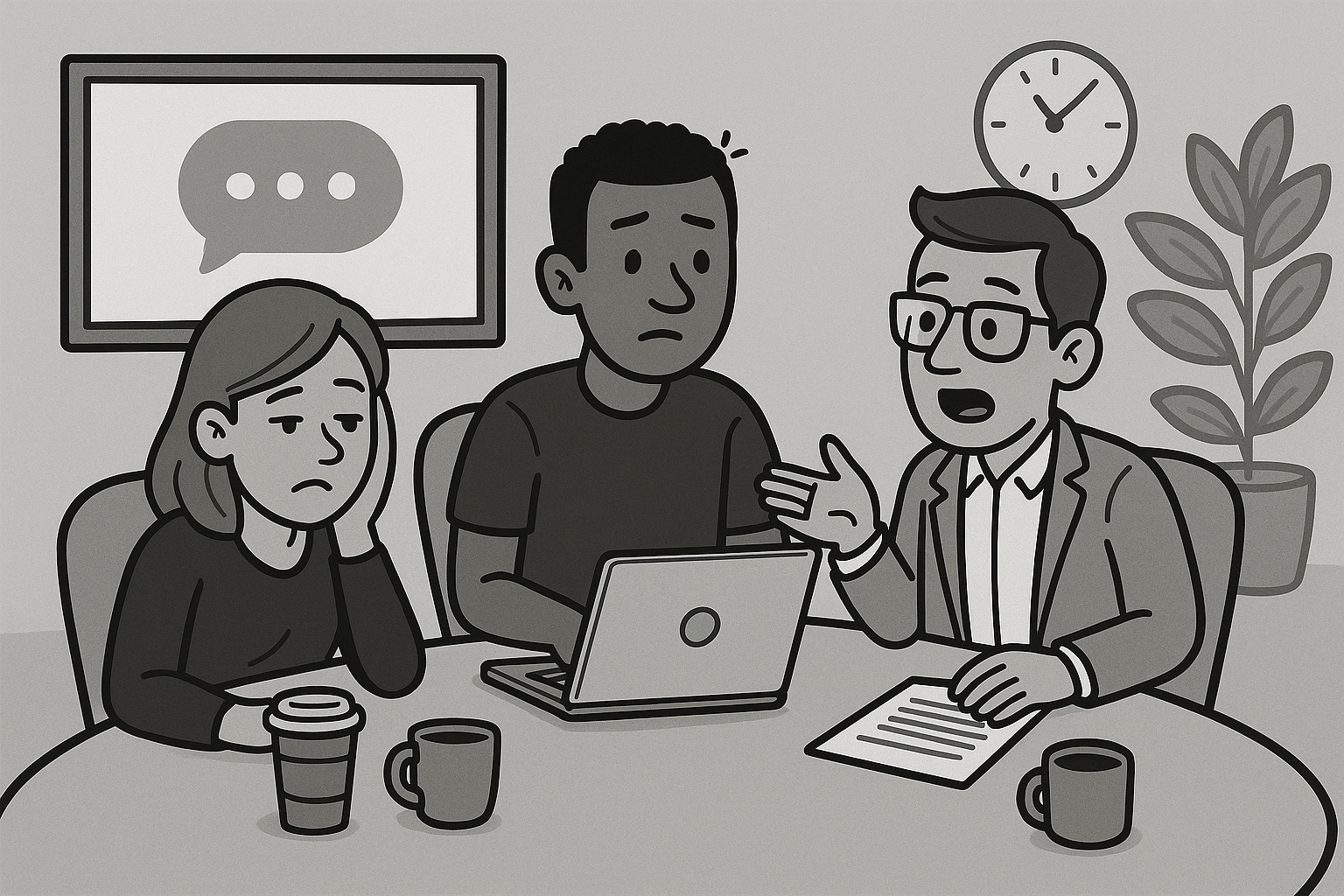
This Meeting Could’ve Been a Comment (But It Wasn’t)
The Async Communication Stack
My tiered approach to avoiding meetings:
if (problem.complexity < 2) {
  return 'Slack thread';
} else if (context.needed) {
  return 'Loom video';
} else {
  return 'Calendar invite';
}
This flow has saved me—and my team—dozens of hours each sprint. It’s not about being antisocial. It’s about clarity, autonomy, and letting people actually do their work without turning every decision into a video call with 9 attendees and 0 conclusions.
When Meetings Are Actually Needed
| Meeting Type | My Rules |
|---|---|
| Standups | Always async on Fridays |
| Retros | Pre-filled board required |
| 1:1s | Only when we have something meaningful to reflect on—not just to "check in" |
| Design Reviews | Deck or doc circulated 24 hours in advance |
I’m not anti-meeting. I’m pro-purpose. The best meetings I’ve had felt like code reviews: scoped, specific, and designed to ship something—an idea, a resolution, a next step. Everything else is cargo cult collaboration.
"A good meeting is like a good pull request—clear purpose, minimal noise, and actionable outcomes. Bonus points if no one says 'circle back.'"
How I Made the Shift
I used to accept every invite like it was a royal summons. 30 minutes here, 45 there—suddenly half my day was gone. I wasn’t getting deep work done. I wasn’t solving problems. I was talking about maybe solving problems later. So I tried something radical: I started saying no. Or at least, “Can we async this?”
At first, it felt risky—like I was breaking a secret social contract. But then people started thanking me. They got time back too. One engineer told me my Loom videos were the only meetings he could play at 2x speed and still get value.
Async Culture Isn’t Lazy—It’s Respectful
When I record a Loom, I make sure it’s tight, organized, and intentional. I even include chapter markers sometimes. Why? Because people deserve context without the obligation of synchronous presence. Async isn’t lower effort. Done right, it’s higher empathy.
And when someone replies with a thoughtful comment? Instant serotonin. Fewer meetings. Better ideas. More trust.
How I Train Teams to Communicate Better
- Default to written proposals: If you can’t explain it in a page, it’s not meeting-ready.
- Record short updates: A 4-minute video beats a 30-minute call. Every time.
- Keep Slack threads structured: Use threads, emojis for voting, and summaries after decisions.
- Document the why, not just the what: Future-you (or your teammates) will thank you.
The Exceptions That Prove the Rule
Of course, some meetings matter:
- Conflict resolution? Synchronous, always.
- Big launches or retros with emotion baked in? Real-time helps.
- 1:1s with direct reports? Use that space for reflection, feedback, and growth—not status updates.
But when a “quick sync” becomes a default habit instead of an intentional tool, you're stealing time—and usually replacing clarity with noise.
Slack Isn’t Always Async Either
Let’s be clear: Slack can become just as noisy as Zoom. Pings ≠ progress. If you’re responding to DMs all day, you’re not async—you’re just always on. True async means establishing response windows, letting people batch their focus, and not expecting answers within 10 minutes unless there’s 🚒 in the subject line.
Lessons & Reflections
- Every meeting should have a purpose, a plan, and a path forward.
- Async-first doesn’t mean no meetings—it means better ones.
- The real cost of meetings isn’t time—it’s context switching.
This post offered an unexpected lens into the topic of "This Meeting Could’ve Been a Comment (But It Wasn’t)"—something I initially underestimated. What began as a routine story evolved into a surprisingly personal audit of where I’ve grown, where I’ve slipped, and what continues to challenge me. I realized that my path hasn't been about linear progress; it’s been a series of weird detours, punchline errors, and the occasional small win that gave me just enough momentum to keep going.
If there's a takeaway, it’s this: context matters. The same challenge that might’ve broken me five years ago now feels like a teachable moment. And maybe that’s the definition of growth. Thanks for sticking with the post—I hope your own journey is full of equally ridiculous, humbling, and surprisingly meaningful moments.