 Jun 29, 2025
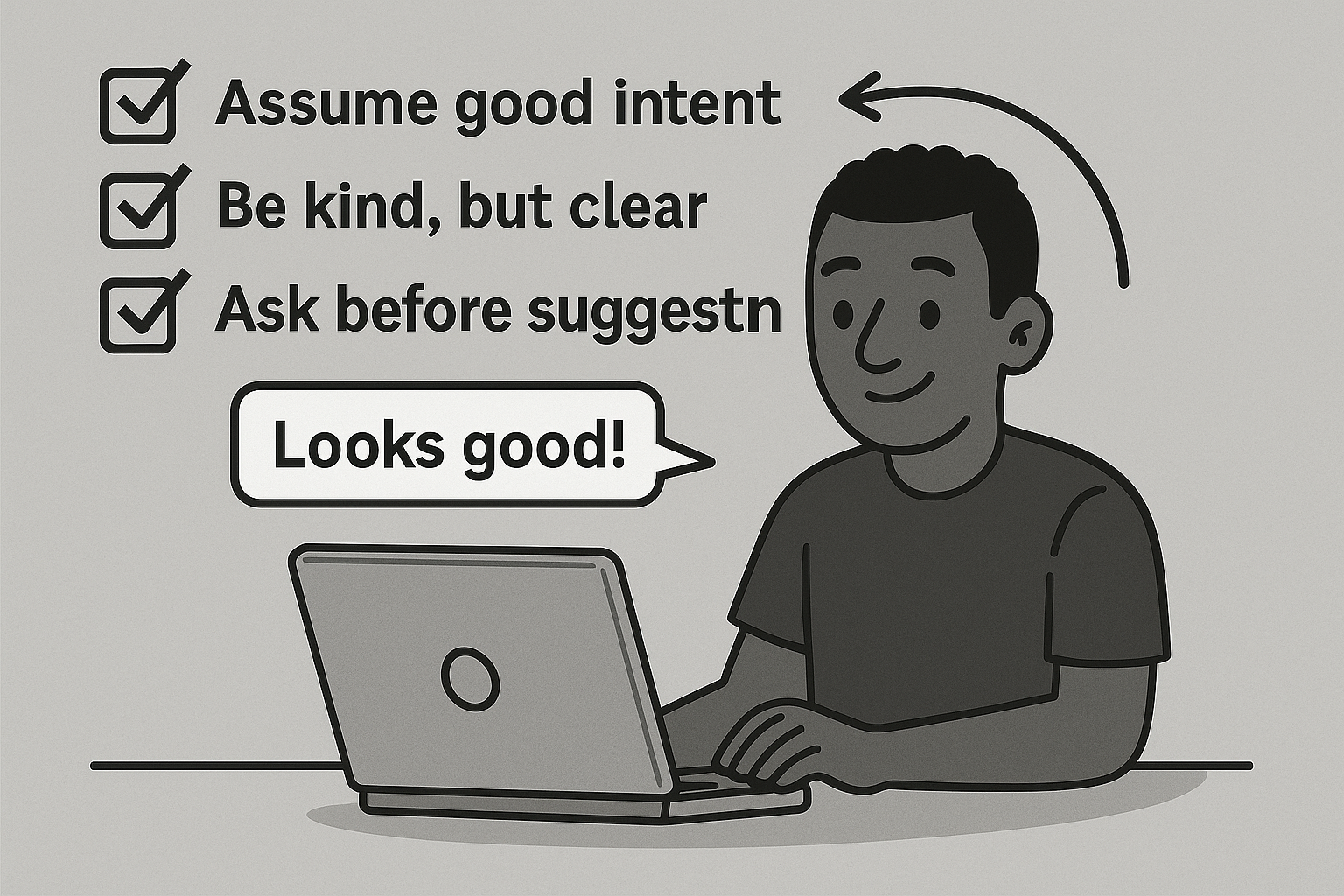
The 3 Rules I Follow in Code Reviews (and Life)
Rule #1: Assume Good Intent (Until Proven Otherwise)
At Salesforce, I reviewed a PR where a junior engineer committed node_modules. Instead of "WTF?", I wrote:
"Might want to add node_modules to .gitignore!
Here's how our team handles dependencies: [link to docs]"
Result: They later told me this kept them from quitting tech. Not because of the technical feedback—but because of the tone. They expected humiliation. They got humanity. That one interaction changed how I review every line of code, and honestly, how I talk to people outside GitHub too.
Rule #2: Be Specific, Not Sarcastic
Sarcasm is the easiest fallback when you're tired, frustrated, or trying to prove how much more you know. But it's lazy communication. Precision is the real flex. I once left a comment that just said, “Interesting approach.” The author didn’t know if I meant it as praise or critique. I had to DM and clarify it was genuine. Lesson: if your feedback can be misinterpreted, it will be.
Now I say things like, “I haven’t seen this pattern used before—can you walk me through the tradeoffs?” or “Would love to understand your thought process here, especially around performance.” You still challenge the code—but not the coder.
Rule #3: Balance Critique With Curiosity
The best code reviews I’ve received didn’t just tell me what was wrong. They asked what I was trying to do. They left space for a dialogue. That curiosity made me feel seen—and helped uncover use cases I hadn’t considered.
So now I leave comments like:
- “This works, but I wonder—how does it handle edge case X?”
- “What happens if the API call fails here? Worth wrapping in a try/catch?”
- “How do you feel about moving this logic into a reusable hook/service?”
It’s not about softening the message. It’s about sharpening the impact by making it a two-way street.
The Framework
| Situation | Bad Response | Better Approach |
|---|---|---|
| Messy code | "This is unreadable" | "Could we break this into smaller functions?" |
| Buggy logic | "This won't work" | "What edge cases should we consider?" |
| Unclear naming | "Terrible var name" | "Could we rename this for clarity around its purpose?" |
"A code review is a conversation, not a court ruling. The best feedback I've given started with 'What if...' instead of 'Don't...'"
Bonus: Reviews Aren’t Just For Code
I’ve started applying these same rules in life. When my kid spills something after I just cleaned the kitchen, I pause before reacting. When a teammate misses a meeting, I check in instead of jumping to conclusions. The principles scale. Assume good intent. Be specific. Stay curious.
Feedback is one of the most human things we do at work—and one of the most overlooked skills to master. And like code, it can be refactored over time. You’ll get better with practice.
What I Wish I’d Known Sooner
- Public humiliation doesn’t teach as well as private encouragement.
- Junior engineers remember how you made them feel more than what you said.
- Your tone in PRs can either nurture a team or quietly corrode it.
- Reviews are opportunities to teach, learn, and model culture—not just ship code.
Lessons & Reflections
- Code reviews are emotional terrain. Tread with care, not caution.
- The best engineers I’ve worked with are the best communicators—especially in critique.
- Compassion scales better than cleverness.
This post offered an unexpected lens into the topic of "The 3 Rules I Follow in Code Reviews (and Life)"—something I initially underestimated. What began as a routine story evolved into a surprisingly personal audit of where I’ve grown, where I’ve slipped, and what continues to challenge me. I realized that my path hasn't been about linear progress; it’s been a series of weird detours, punchline errors, and the occasional small win that gave me just enough momentum to keep going.
If there's a takeaway, it’s this: context matters. The same challenge that might’ve broken me five years ago now feels like a teachable moment. And maybe that’s the definition of growth. Thanks for sticking with the post—I hope your own journey is full of equally ridiculous, humbling, and surprisingly meaningful moments.